
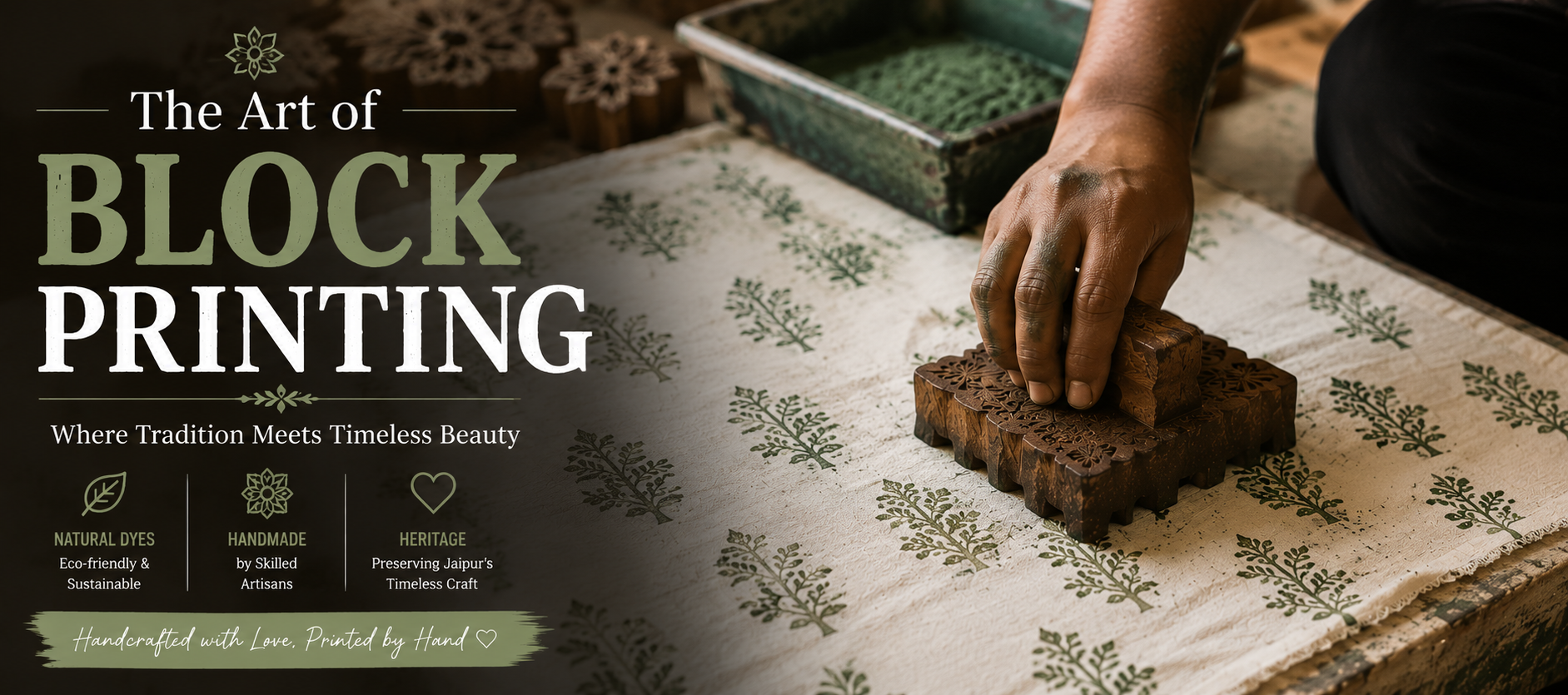
Meet Our Artisans: The Masters of Block Printing in Jaipur
Meet Our Artisans: The Masters of Block Printing in Jaipur
Behind every hand block printed textile at Sahyansh stands a skilled artisan—a master craftsperson whose hands have been trained through years of dedication, often following in the footsteps of family members who came before them. These are the real heroes of our brand, the people who transform raw cotton into wearable art.
In a world increasingly dominated by machines and automation, our artisans continue to practice techniques that have been perfected over centuries. Their dedication to traditional craftsmanship, their commitment to quality, and their passion for preserving this ancient art form are what make Sahyansh different. This is their story.
The Legacy of Block Printing in Jaipur
Jaipur's reputation as a center for hand block printing didn't happen by accident. For generations, families in and around Jaipur have devoted their lives to this craft. The city is home to some of India's most skilled block carvers, printers, and textile artisans—people whose expertise is recognized across the country and beyond.
Block printing is not just a job in Jaipur; it's a cultural identity. Many of our artisans grew up watching their fathers, grandfathers, and great-grandfathers work the wooden blocks, mix the natural dyes, and create beautiful patterns on fabric. For them, this craft is a living connection to their heritage—a way of honoring their ancestors while supporting their families.
What's remarkable is that despite the availability of machines that could do this work faster and cheaper, our artisans choose to continue the traditional way. They understand something that machines never can: that handmade work carries a soul. Every textile they create tells a story of patience, skill, and care.
The Hands That Carve
The journey of a hand block printed textile begins with the block carvers—perhaps the most skilled artisans in the entire process. These are people who have spent years, often decades, learning to read wood, understand grain patterns, and translate designs into carved wooden blocks.
A master block carver must balance multiple competing demands. The carving must be deep enough to hold ink but not so deep that it splinters or cracks. The details must be precise enough that patterns align perfectly when the block is pressed repeatedly across fabric. The carver must work quickly enough to be productive, but slowly enough to ensure quality.
Many of our block carvers learned their trade from family members. They started as children, watching their parents work, gradually taking on small tasks, and slowly developing the muscle memory and intuition required for this intricate work. This informal apprenticeship system has preserved block carving knowledge for generations.
What we've learned from working with these master carvers is that each one develops their own style, their own way of interpreting designs, their own preferred tools and techniques. This individuality is one reason why no two hand block printed textiles are ever exactly identical—each block carver brings their unique touch to the work.
The Natural Dye Masters
While block carvers create the tools of the trade, the dye masters create the colors that bring designs to life. These artisans possess knowledge that goes back centuries—knowledge about which plant sources produce which colors, how to achieve specific shades, how to prepare dyes that will last decades without fading.
Our dye masters work with natural sources like indigo, madder root, turmeric, henna, and various plant-based compounds. They maintain recipes that have been passed down through their families, often keeping proportions and techniques secret—knowledge too valuable to share.
What's particularly impressive is their scientific understanding, even without formal chemistry education. They understand how different minerals, plant materials, and natural binders interact. They know how temperature, timing, and moisture affect dye quality. They've learned through experimentation and tradition which combinations will produce the most beautiful, long-lasting colors.
The work of preparing dyes is labor-intensive and requires patience. Some natural dyes must sit for weeks before they're ready to use. Others require precise temperature control. Our dye masters approach this work with the same dedication that master chefs bring to their craft—treating it as both science and art.
The Block Printers: Where Skill Meets Experience
If carvers create the tools and dye masters create the colors, then the block printers are the orchestra conductors—bringing everything together in a rhythmic, precise dance that transforms fabric into art.
Watch our artisans at work:
Block printing looks deceptively simple when you watch an experienced artisan at work. Dip the block in ink, press it on fabric, lift it away, move to the next position. Repeat hundreds of times across the length of a large textile. But what looks effortless is actually the result of thousands of hours of practice.
A block printer must maintain perfect pressure every single time. Too light, and the pattern doesn't fully transfer. Too heavy, and the ink bleeds, creating blurry edges. The pressure must be even across the entire block so that every part of the pattern prints with equal clarity. The alignment must be precise so that patterns line up perfectly as the work continues across the fabric.
Our most experienced block printers can work for hours maintaining this level of focus and precision. They develop a rhythm, a flow state where their hands move almost automatically while their minds remain intensely focused on maintaining consistency.
What's beautiful is watching them work as a team. Experienced printers often work in pairs or small groups—one handling the inking, another managing the fabric positioning, a third moving completed sections aside to dry. They've developed such synchronicity that their movements seem choreographed, like a traditional dance.
Why These Artisans Choose This Path
In modern India, young people have many opportunities. They can move to cities, pursue education, work in offices or factories with regular salaries. Yet many choose to stay with traditional block printing. Why?
For some, it's family tradition—they're carrying forward a legacy that matters deeply to them. They see themselves as custodians of cultural heritage, responsible for preserving knowledge that would otherwise be lost.
For others, it's the satisfaction of creating something beautiful with their own hands. In a world where so much work feels abstract or disconnected from real products, these artisans can point to something tangible—a textile they created that will bring beauty and comfort to someone's home.
There's also dignity in mastery. These aren't just workers following instructions; they're skilled craftspeople with expertise that took years to develop. They take pride in their work, in the quality of their output, in the respect they've earned within their communities.
And importantly, when artisans work with companies like Sahyansh that respect their craft and pay fairly, this work becomes economically viable. They can support their families. They can afford to send their children to school. They can invest in their workshops. Traditional crafts survive when there's genuine demand and fair compensation.
The Challenges Our Artisans Face
Despite the beauty of what they create and the importance of their work, our artisans face real challenges. Younger generations sometimes move away from traditional crafts, lured by the promise of easier, more stable work in cities. The physical demands of the work—repetitive motions, long hours standing, exposure to dyes—can take a toll on health.
There's also the challenge of competing with machines. Mass-produced printed textiles made on automated machines are cheaper, and many consumers don't understand the difference between machine-printed and hand block printed work. Preserving these crafts requires finding customers who appreciate the difference and are willing to pay fairly for it.
This is where we believe companies like Sahyansh play a crucial role. By creating consistent demand for hand block printed textiles, by paying artisans fairly, and by telling their stories so that customers understand the value of their work, we help ensure that these traditions continue to thrive.
Training the Next Generation
Some of our master artisans are actively training younger craftspeople—both family members and others interested in learning the craft. This is how block printing knowledge has survived for centuries, and how it will continue into the future.
The training process is gradual. Apprentices start by learning to prepare materials, to observe the masters at work, to understand the principles behind each technique. Over months and years, they gradually take on more responsibility, developing the muscle memory and intuition required for this intricate work.
What's encouraging is seeing young people choose this path. Some are attracted by cultural pride—a desire to keep their heritage alive. Others are simply drawn to the beauty of the work and the satisfaction of creating something meaningful. When block printing is presented as a valuable, respected craft rather than an outdated practice, it becomes an attractive career choice.
The Stories Behind Our Textiles
Every hand block printed quilt, bedsheet, dohar, and cushion cover at Sahyansh carries within it the story of the artisans who created it. When you hold one of our textiles, you're holding the work of multiple skilled craftspeople:
- The block carver who spent days creating the wooden block with your design
- The dye master who prepared the natural colors using recipes perfected over generations
- The fabric preparer who washed and stretched the cotton to ensure perfect printing
- The block printer who pressed the block hundreds of times with perfect pressure and alignment
- The finisher who washed and inspected the completed textile to ensure quality
These are real people, with names and families and communities. They take pride in their work. They care about quality. They understand that the textile they're creating will become part of someone's home, part of their daily life.
This human element—this direct connection between maker and customer—is what sets hand block printed textiles apart from machine-made alternatives. When you buy from Sahyansh, you're not just purchasing a product; you're supporting a community of artisans and helping preserve a cultural tradition.
Respecting the Craft, Supporting the Artisans
Our commitment to our artisans goes beyond fair wages (though that's fundamental). It means respecting their expertise and involving them in design decisions. It means providing stable, consistent work rather than boom-and-bust cycles. It means investing in safe working conditions and proper tools.
It also means being transparent about what they do. Too often, traditional crafts are romanticized without recognition of the genuine skill involved. We want people to understand that these aren't hobbyists or people doing quaint traditional work—they're skilled professionals with expertise that took years to develop.
When customers understand the artistry and labor involved in creating a hand block printed textile, they appreciate it more deeply. They understand why it costs more than mass-produced alternatives. They value the slight variations that prove authenticity. They become not just customers but supporters of traditional craft and cultural preservation.
The Future of Block Printing in Jaipur
The future of hand block printing depends on multiple factors: continued demand from customers who value this craft, fair compensation for artisans, investment in training the next generation, and cultural recognition of the importance of preserving these traditions.
We're hopeful because we see genuine interest from new generations—both young artisans choosing this path and young customers seeking authentic, handmade products. We see growing recognition of the value of sustainable, ethically-produced textiles. We see block printing gaining respect not as a relic of the past but as a valuable, respected craft.
At Sahyansh, we're committed to being part of this story. By creating sustainable demand for hand block printed textiles, by compensating artisans fairly, and by sharing their stories, we're helping ensure that this beautiful tradition continues to thrive.
Experience the Artistry
If this story of our artisans has inspired you, we invite you to experience their work firsthand. Explore our collection of hand block printed quilts, block printed bedsheets, hand block print dohars, and cushion covers. When you hold one of our textiles, you're holding the artistry and dedication of skilled craftspeople in Jaipur.
Shop Our Hand Block Printed Collection
Want to learn more about our artisans or the stories behind specific textiles? We'd love to connect! Reach out to us on Instagram @house_of_sahyansh or visit Sahyansh.com. Every textile has a story, and we'd be honored to share it with you.
-
 August 26th, 2026
 -
Fitted vs Flat Bedsheets: Why More Homes Are Making the Switch
July 25th, 2026 -
 July 22nd, 2026
 -
 July 18th, 2026
 -
 July 9th, 2026