
Jaipuri Razai vs Regular Quilts: What's the Difference?
Jaipuri Razai vs Regular Quilts: What's the Difference?
Have you ever pulled a quilt over yourself on a cold night and still felt... uncomfortable? Too hot, too heavy, or just not right?
That feeling is exactly why millions of Indian homes switched to a Jaipuri razai — and never looked back.
But what actually makes a Jaipuri razai so different from a regular quilt? Is it just the pretty print on the outside? Or is there something deeper going on?
In this blog, we break it all down — simply, clearly, and honestly. By the end, you will know exactly what to look for the next time you buy a quilt.
What Is a Jaipuri Razai?
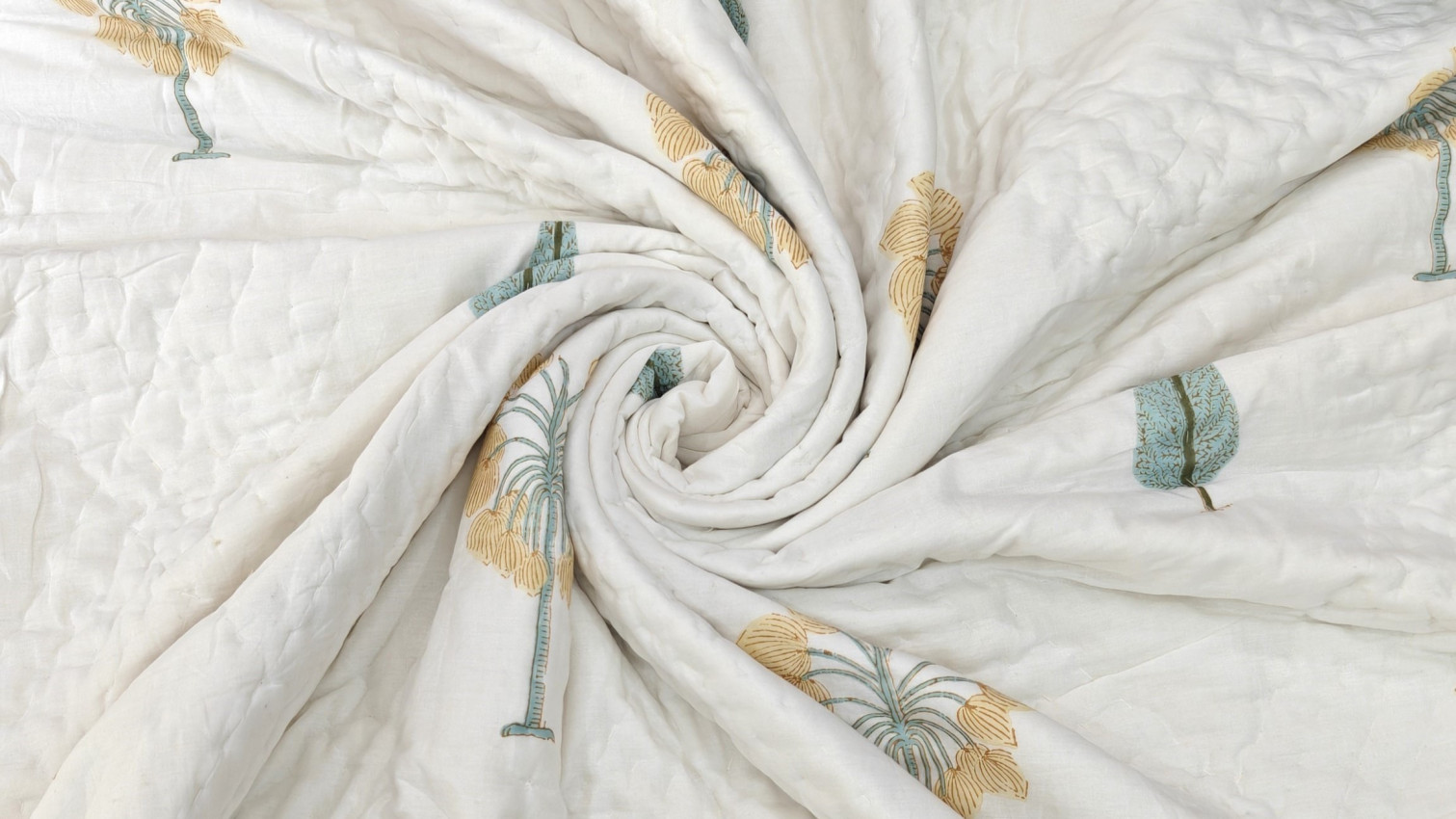
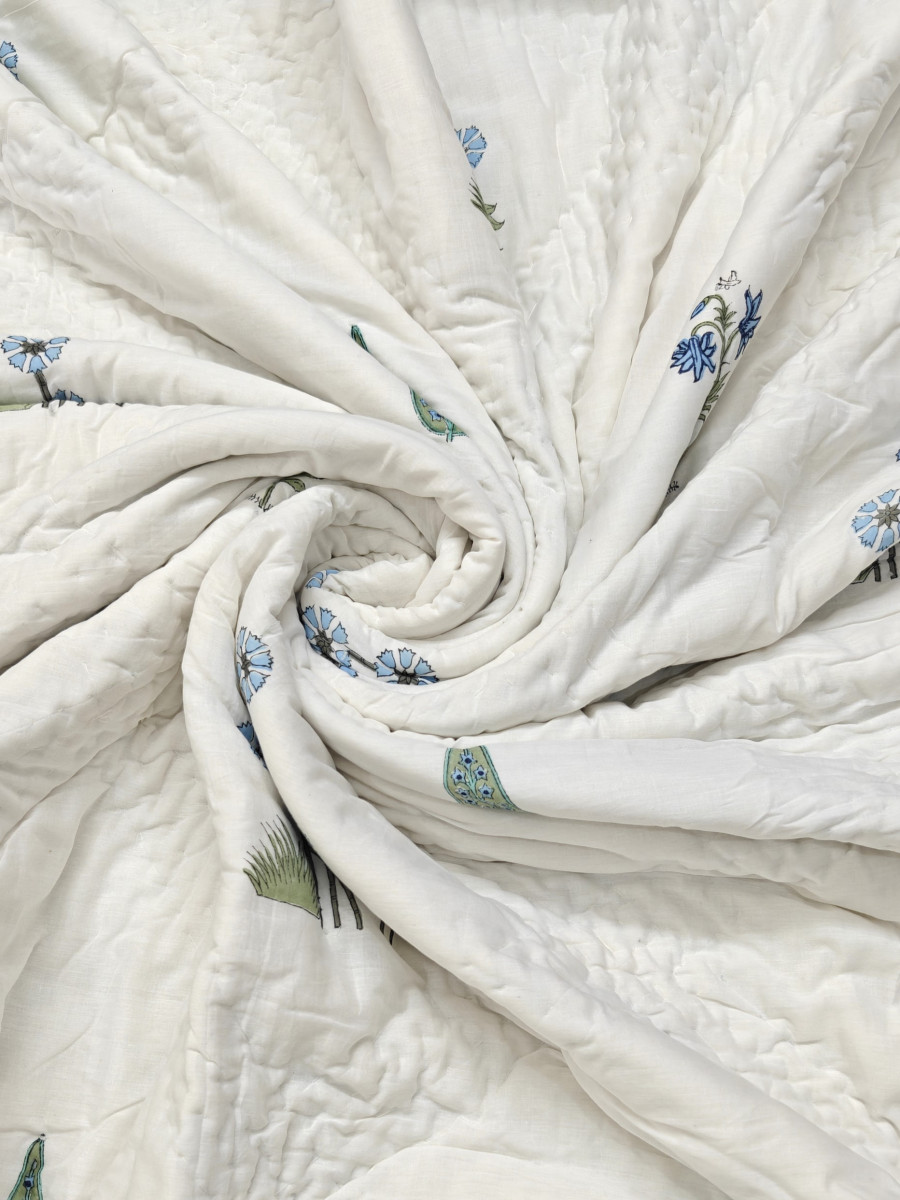
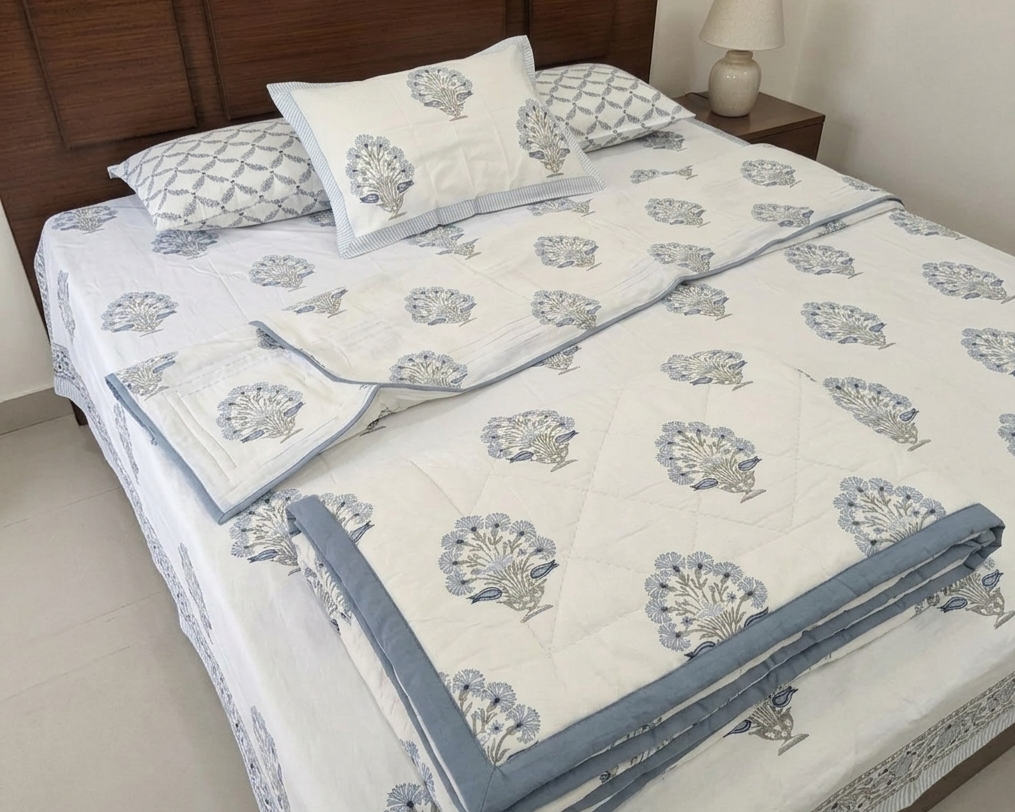
A Jaipuri razai is a traditional hand block printed quilt that originates from Jaipur, Rajasthan. For centuries, skilled artisans in Jaipur have crafted these razais using techniques passed down through generations.
However, a Jaipuri razai is not just a pretty quilt. It is a combination of three things — the fabric, the filling, and the craft — all working together to give you a sleeping experience that regular quilts simply cannot match.
In fact, UNESCO recognizes traditional hand block printing as an intangible cultural heritage of humanity — which gives you an idea of how special this craft truly is.
The Secret Is in the Filling — And It Will Surprise You
Most people focus only on the outside of a quilt. However, the filling is actually what makes or breaks your sleep.
A regular quilt is filled with synthetic hollow fibre or polyester. It feels fluffy at first. But polyester does not breathe. It traps heat unevenly, makes you sweat through the night, and after just a few washes, the filling clumps and shifts to one side.
A genuine Jaipuri razai, on the other hand, uses 100% natural cotton filling. Cotton breathes naturally. As a result, it distributes warmth evenly across your body without overheating you. You stay warm without feeling suffocated.
Therefore, the difference is simple — synthetic filling makes you warm. Cotton filling keeps you comfortable. These are two very different things.
Mulmul Fabric — Light as Air, Soft as a Cloud
The outer fabric of a Jaipuri razai is what you feel against your skin every night. That is why the fabric choice matters so much.
Regular quilts typically use thick outer fabric — sometimes polyester blends, sometimes heavy cotton that feels stiff and rough after a few washes.
A Jaipuri razai uses mulmul cotton — one of the finest, softest cotton weaves in the world. Mulmul is feather-light, breathable, and in fact gets softer with every dry clean. Because of its delicate weave, it feels incredibly gentle against the skin.
That signature lightness you feel when you first pick up a Jaipuri razai? That is the mulmul. Warm without the weight. Cosy without being heavy.
Additionally, mulmul is naturally hypoallergenic — making it a great choice for people with sensitive skin or allergies.
Hand Block Print vs Machine Print — One Has a Soul, One Doesn't
Every Jaipuri razai carries something a regular quilt never can — the mark of a human hand.
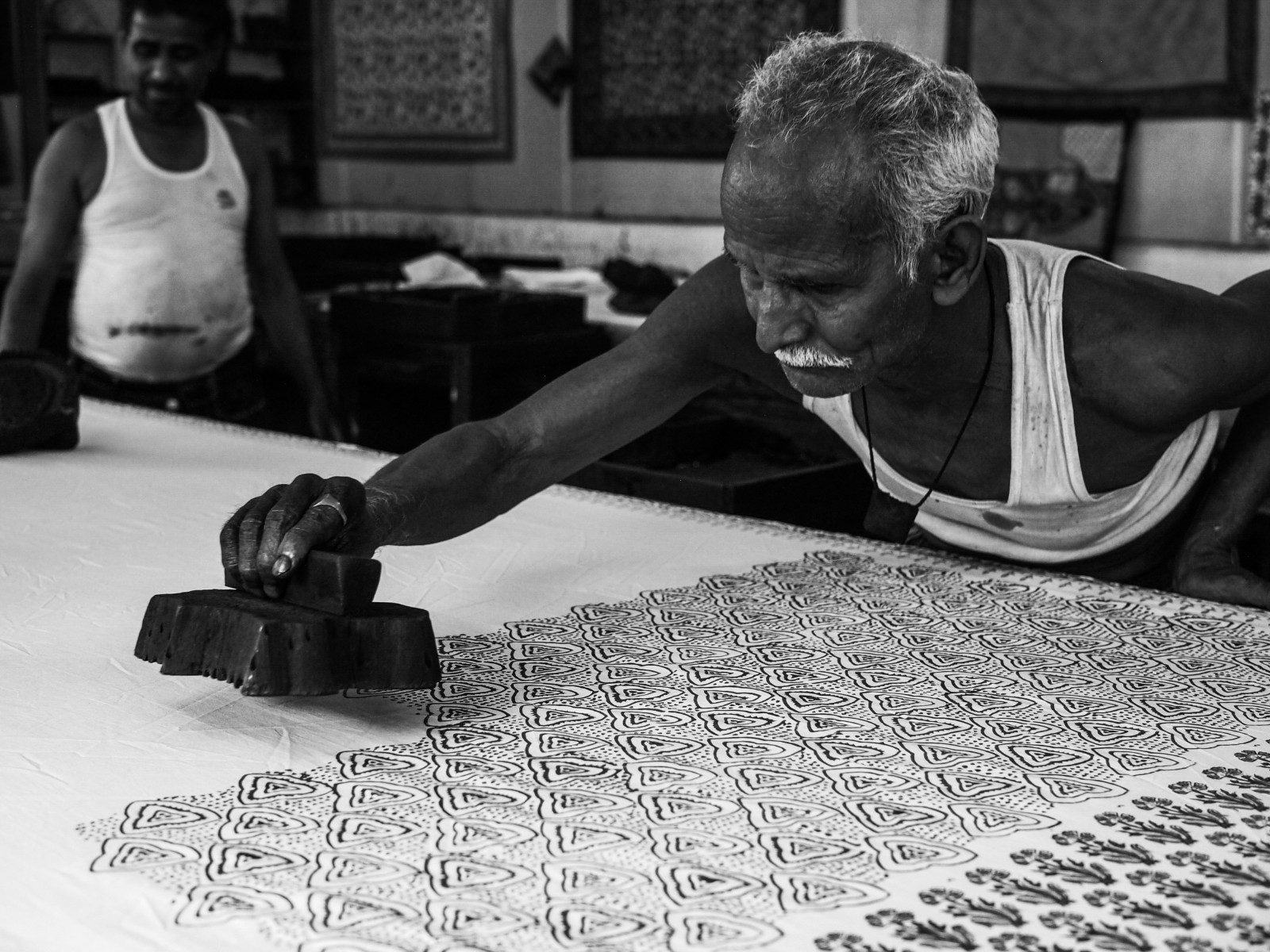
The prints on a Jaipuri razai are stamped one block at a time by a skilled artisan. Each motif — whether it is a buta, a jaal, a peacock, or a floral pattern — is pressed by hand onto the mulmul fabric using carved wooden blocks dipped in colour-fast dyes.
The result? Slight natural variations in the pattern. No two Jaipuri razais are ever perfectly identical. Each one is unique.
A regular quilt, on the other hand, is machine printed. Consequently, every piece looks exactly the same. There is no story behind it, no craft, no human touch.
Furthermore, when you sleep under a Jaipuri razai, you are sleeping under something that was made — not manufactured.
A Jaipuri Razai Works All Year Round
Most regular quilts are thick, heavy, and strictly meant for winter. Use them in March and you will overheat.
A Jaipuri razai — because of its breathable cotton filling and mulmul cover — works beautifully across seasons. It is warm enough for cold winter nights. Moreover, it is light enough to use as an AC quilt in summer.
Therefore, instead of buying a separate quilt for each season, one well-made Jaipuri razai does the job all year. Many families in Rajasthan have used the same Jaipuri razai for over a decade — and it still looks and feels wonderful.
How to Care for Your Jaipuri Razai
Caring for your Jaipuri razai is simple. However, there is one important rule — dry clean only.
Machine or hand washing can disturb the natural cotton filling and affect the hand block print colours. Additionally, always store your Jaipuri razai completely dry to prevent mildew. Air it out occasionally between uses to keep the cotton filling fresh and fluffy.
With proper care, a genuine Jaipuri razai can last for many, many years.
Is a Jaipuri Razai Worth It?
A good Jaipuri razai costs more than a synthetic quilt. That is true. However, consider what you are actually getting.
Natural cotton filling that lasts years without clumping. Mulmul fabric that gets softer with age. A hand block printed design made by a skilled Jaipur artisan who has spent years perfecting this craft.
A synthetic quilt lasts two seasons before the filling shifts and the print fades. A Jaipuri razai, on the other hand, lasts a decade — and looks better with age.
In addition, when you buy a Jaipuri razai from Sahyansh, you are directly supporting artisan families in Rajasthan who have practised this craft for generations. Your purchase keeps that tradition alive.
Explore our full collection of authentic Jaipuri razais — Free shipping across India
The Bottom Line
The difference between a Jaipuri razai and a regular quilt is not just about looks. It is about the filling, the fabric, the craft, and the story behind it.
One is made to sell. The other is made to last.
If you have never slept under a genuine Jaipuri razai, you owe it to yourself to try one. And if you already own one — you already know exactly what we mean.
Also read: Hand Block Printing — Everything You Need to Know
-
 August 26th, 2026
 -
Fitted vs Flat Bedsheets: Why More Homes Are Making the Switch
July 25th, 2026 -
 July 22nd, 2026
 -
 July 18th, 2026
 -
 July 9th, 2026