
Difference Between Mulmul and Muslin: Which Fabric Is Right for You?
If you have ever shopped for bedsheets, quilts, or home textiles in India, you have probably come across two fabric names — mulmul and muslin. Most people use these words interchangeably. But the difference between mulmul and muslin is real, and knowing it can help you make a smarter purchase.
In this guide, we explain both fabrics simply — so you can choose the right one for your home.
What is Mulmul?
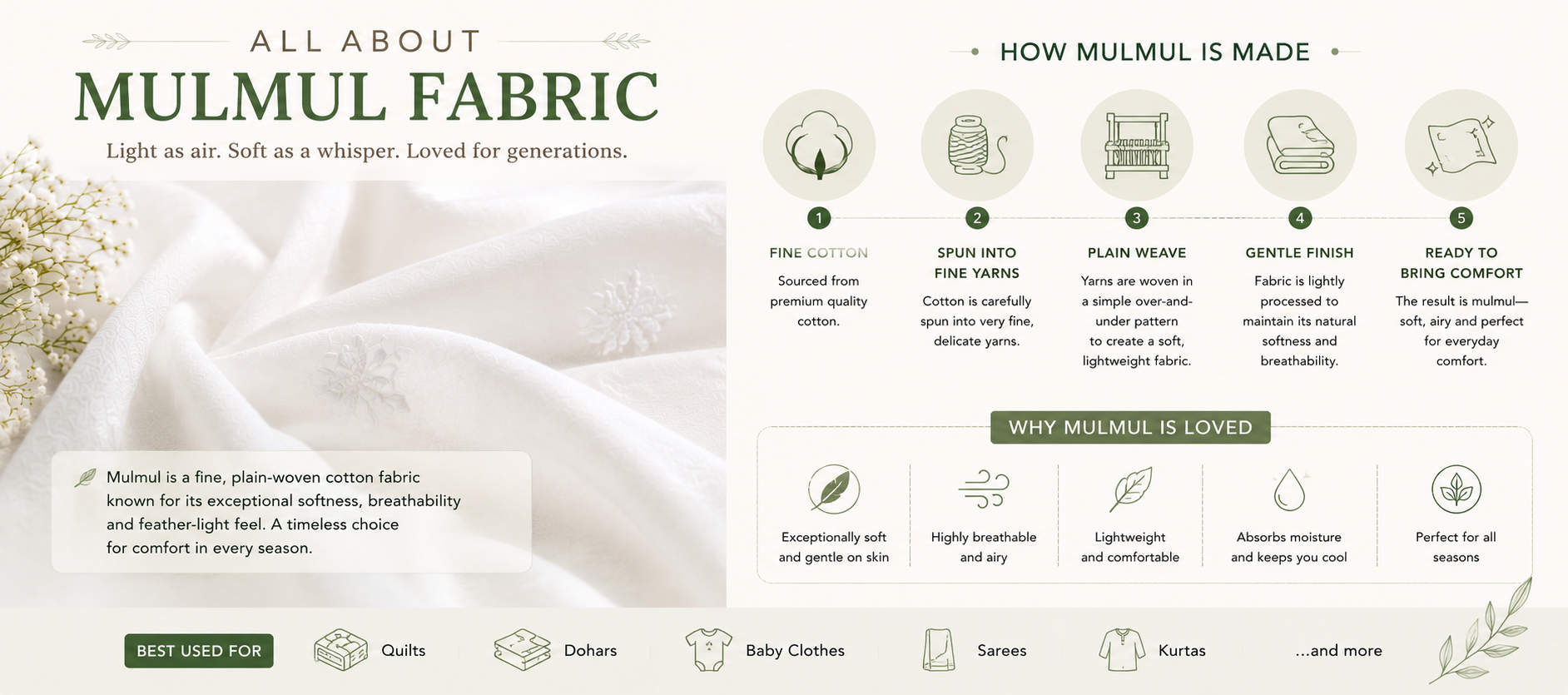
Mulmul is a soft, lightweight cotton fabric that has been woven in India for centuries. The word comes from Hindi and refers to fine cotton cloth traditionally made in Rajasthan. Here is what makes mulmul special:
- Made from 100% pure cotton
- Ultra-soft and extremely breathable
- Very lightweight — perfect for Indian summers
- Gets softer with every wash
- Ideal for bedsheets, quilts, dohars, and baby clothing
Mulmul is the fabric of choice for traditional Jaipuri quilts and bedsheets. It keeps you cool in summer and warm in winter — making it perfect for the Indian climate. India has a rich history of block printing techniques that pair beautifully with mulmul fabric.
What is Muslin?
Muslin is also a plain-woven cotton fabric, similar in feel to mulmul. It originally came from the city of Mosul in Iraq and is now produced across India, Bangladesh, and China. Key features of muslin:
- Made from cotton or cotton blends
- Slightly heavier and more structured than mulmul
- More opaque and stiff
- Used in clothing, curtains, packaging, and swaddle blankets
- Varies in quality from very fine to coarser grades
Muslin is a broad category of fabric used across many industries — from high fashion to industrial use.
Key Differences Between Mulmul and Muslin
Here is a simple comparison to understand the difference between mulmul and muslin:
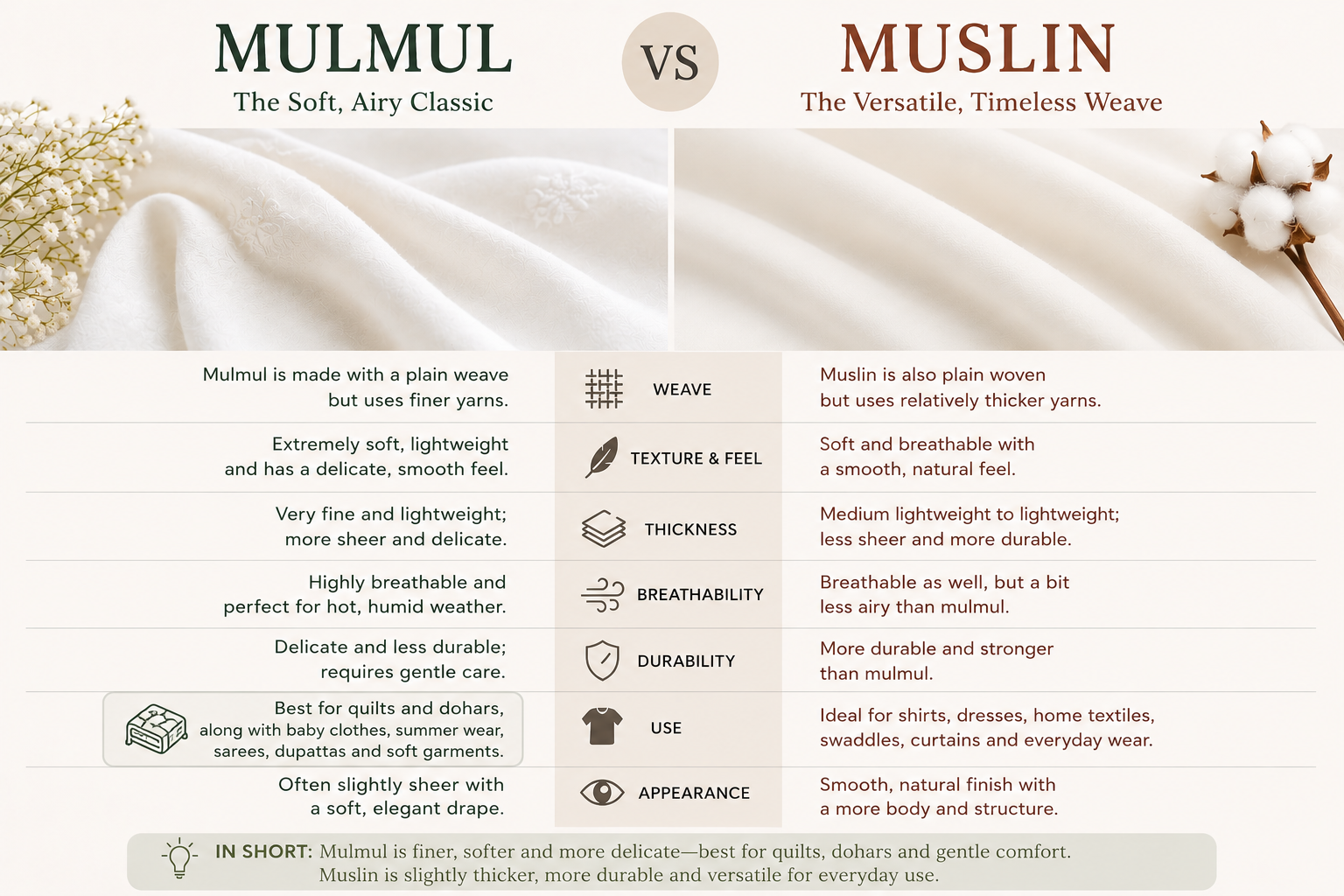
| Feature | Mulmul | Muslin |
|---|---|---|
| Origin | India (Rajasthan) | Mosul, Iraq |
| Weight | Ultra-lightweight | Slightly heavier |
| Softness | Extremely soft | Soft to medium |
| Breathability | Very high | High |
| After washing | Gets softer | Stays similar |
| Best used for | Bedding, quilts, dohars | Clothing, curtains, packaging |
| Cotton purity | Always 100% cotton | Sometimes blended |
The biggest difference between mulmul and muslin comes down to softness and end-use. Mulmul is specially refined for bedding and direct skin contact. Muslin is a wider category used across many industries.
Which Fabric Should You Choose?
The answer depends on what you need.
Choose mulmul if:
- You want bedsheets, quilts, or dohars
- You live in a hot climate like Rajasthan or other parts of India
- You want a fabric that becomes softer over time
- You prefer 100% natural, pure cotton
Choose muslin if:
- You need fabric for clothing, curtains, or packaging
- You want a slightly stiffer or more structured fabric
- You are working on a craft or fashion project
For home textiles — especially quilts, dohars, and bedsheets — mulmul is the clear winner.
Why Sahyansh Uses Mulmul for All Its Products
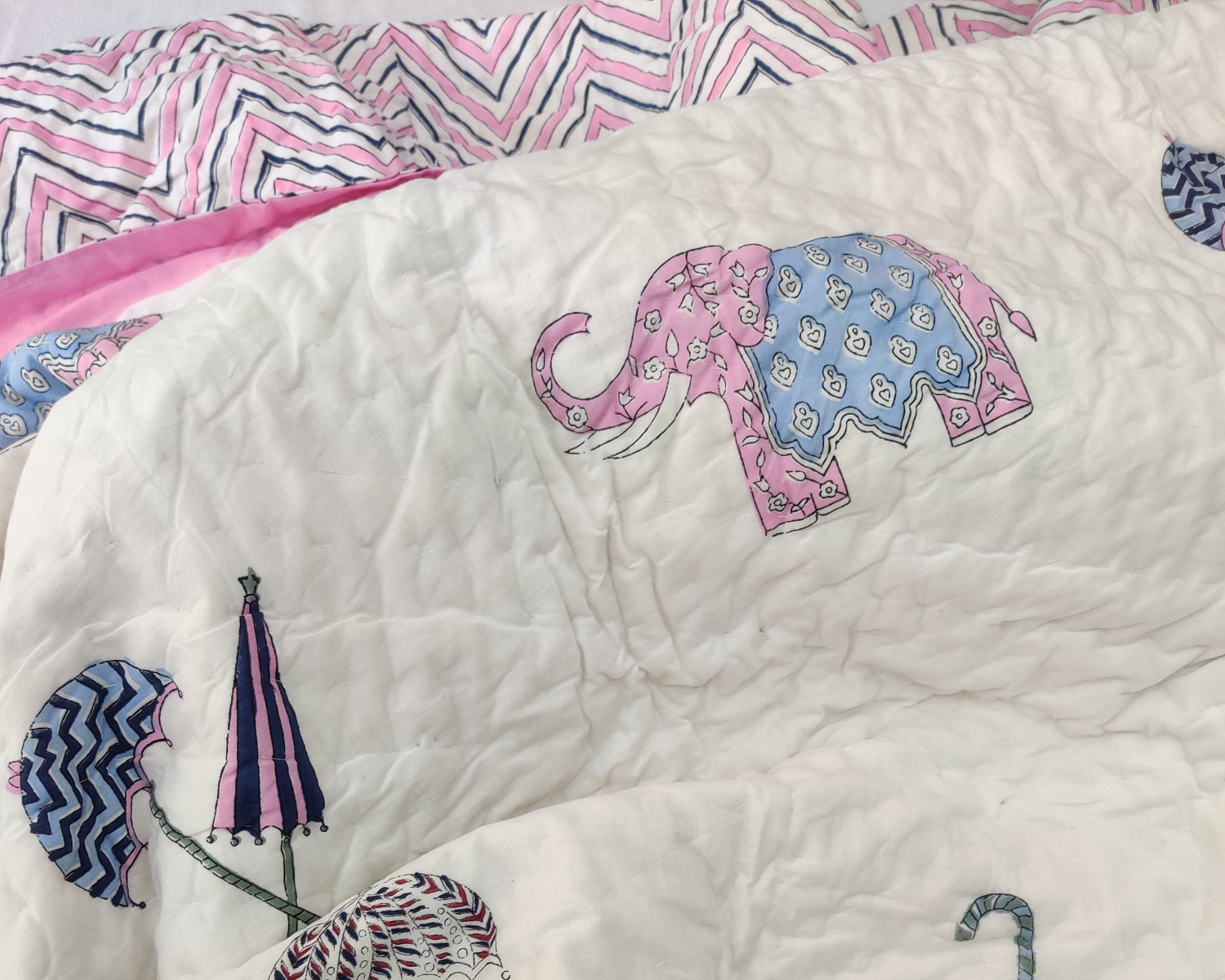
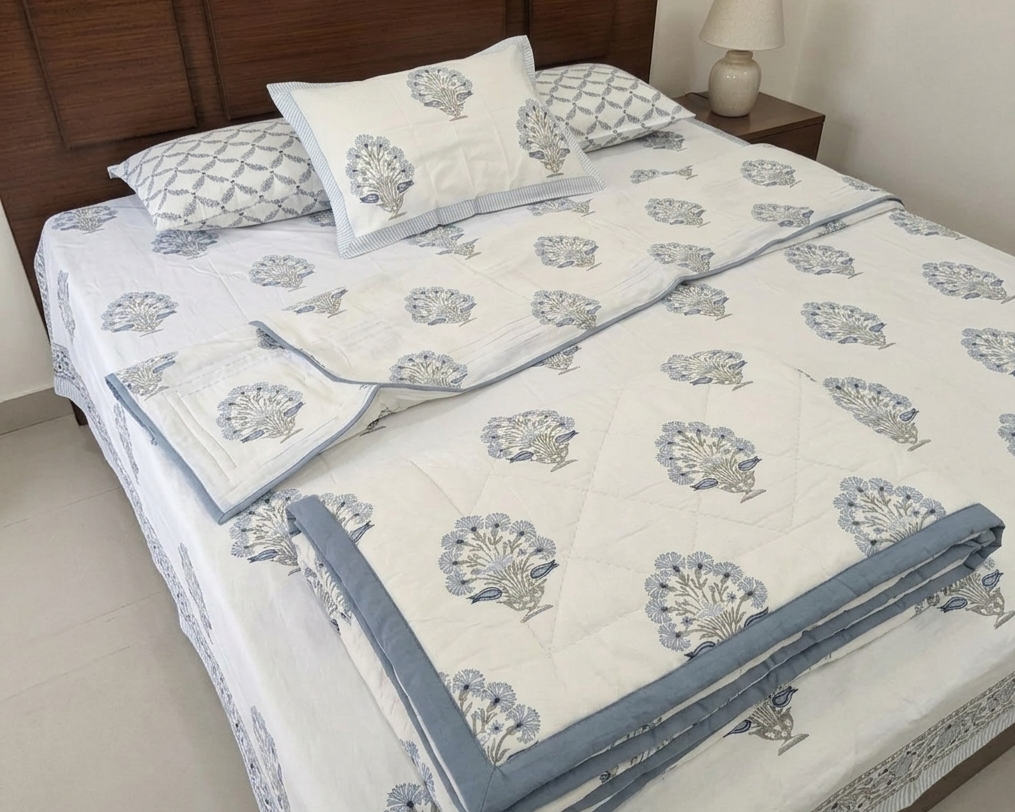
At Sahyansh, every quilt, dohar, and bedsheet is crafted using 100% pure mulmul cotton, sourced directly from artisan families in Rajasthan. We chose mulmul because of its unmatched softness, breathability, and its ability to carry hand block prints beautifully.
Each piece in our collection is made using centuries-old block printing techniques — making it unique, eco-friendly, and built to last.
Explore our collection:
Final Thoughts
Now that you know the difference between mulmul and muslin, you can make a better choice the next time you shop for home textiles. Both are natural cotton fabrics — but for bedding and quilts, pure mulmul cotton stands out for its softness, breathability, and durability.
If you are looking for authentic mulmul products crafted by Rajasthan artisans, explore the full collection at Sahyansh. To learn more about India's handloom heritage, visit the Office of the Development Commissioner for Handlooms.
Add Sahyansh as a Preferred Source on Google
-
 August 26th, 2026
 -
Fitted vs Flat Bedsheets: Why More Homes Are Making the Switch
July 25th, 2026 -
 July 22nd, 2026
 -
 July 18th, 2026
 -
 July 9th, 2026